Monday, October 6, 2008

82

82 = 22 x 3 x 7.

84 has a unique representation as a sum of three squares: 84 = 22 + 42 + 82.

84 is the smallest number with eight representations as a sum of two primes: 84 = 5 + 79 = 11 + 73 = 13 + 71 = 17 + 67 = 23 + 61 = 31 + 53 = 37 + 47 = 41 + 43.

84 is the seventh tetrahedral number.

84 is 77 in base 11.

82 is a Pell-Lucas number (or companion Pell number). The first two numbers in the sequence are both 2, and each successive number is formed by adding twice the previous Pell-Lucas number to the Pell-Lucas number before that. The first few terms of the sequence are 2, 2, 6, 14, 34, 82, 198, 478, . . .

Messier 82 is a starburst galaxy in the constellation Ursa Major.


In both the National Basketball Association and the National Hockey League, each team plays an 82-game regular season schedule.

Source: Wikipedia; On-Line Encyclopedia of Integer Sequences
Image: NASA/JPL-Caltech/STScI/CXC/UofA/ESA/AURA/JHU

Friday, October 3, 2008

141

141 = 3 x 47.

141
is the first of eight consecutive numbers that each has precisely two principal divisors.

141 = 3 x 47
142 = 2 x 71
143 = 11 x 13
144 = 2
4 x 32
145 = 5 x 29
146 = 2 x 73
147 = 7 x 7
2
148 = 2
2 x 37

141 is the first numerical palindrome that appears in the decimal expansion of pi: 3.14159 . . .

Cullen numbers have the form n2n + 1. They are prime for n = 1, 141, 4713, 5795, 6611, and 18496, and composite for every other n less than or equal to 30,000.


The
Lockheed C-141 Starlifter was a U.S. military aircraft.

Source: Roger B. Eggleton and James A. MacDougall. 2008. Consecutive integers with equally many principal divisors. Mathematics Magazine 81(October):235-248.

Thursday, October 2, 2008

169

169 is a square: 13 x 13 = 169. Note that, in reverse order, 961 = 312.

169 is the smallest three-digit square whose digits are increasing. It is also the smallest square that is a prime number when turned upside down (691).

169 is the sum of seven consecutive primes: 13 + 17 + 19 + 23 + 29 + 31 + 37 = 169.

Add the factorials of its digits: 1! + 6! = 9! = 363,601. Repeat the process with 363,601 to get 3! + 6! + 3! + 6! + 0! + 1! = 1454. Repeat the process to get
169.

169 is the smallest square that is the difference of two cubes: 83 – 73 = 169.

169 has a representation as a sum of two squares: 169 = 52 + 122.

169 is the hypotenuse of a primitive Pythagorean triple: 1692 = 1192 + 1202.


The number of nonequivalent starting hands in Texas hold ‘em poker is
169.

Wednesday, October 1, 2008

5231

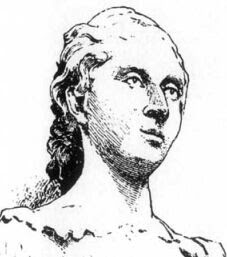
5231 is a Sophie Germain prime. A prime number p is a Sophie Germain prime if 2p + 1 is also prime. 5231 is a Sophie Germain prime because 2 x 5231 + 1 = 10463 is also prime. Sophie Germain primes are mentioned in the stage play Proof and the subsequent film.


Sophie Germain (1716-1831)

5231 and 5233 form a twin prime pair.

5231 is a number that cannot be written as a sum of three squares.

5231 is a prime where all the digits except the last one are prime.


In “My Mother the Carjacker,” the second episode of the fifteenth season of The Simpsons, two female convicts riding a prison bus share the same ID number: 5231.

Sources: The Simpsons: My Mother the Carjacker
Image: MAA Loci: Convergence Portrait Gallery

Tuesday, September 30, 2008

136

136 = 23 x 17.

136 is the smallest number (except 1) such that the sum of the cubes of the digits of the sum of the cubes of its digits equals itself: 13 + 33 + 63 = 244 and 23 + 43 + 43 = 136.

136 is a refactorable number (divisible by the count of its divisors); it has a total of 8 divisors (1, 2, 4, 8, 17, 34, 68, 136), with 8 among them.

136 is a triangular number, which can be represented in the form of a triangular grid of points, where the first row contains a single element and each subsequent row contains one more element than the previous one. Hence, it is the sum of the first 16 positive integers.


A representation of the first few triangular numbers.
136 is 10001000 in base 2 (binary) and 88 in base 16.
136 has a representation as a sum of two squares: 136 = 62 + 102.


136 Austria is an asteroid discovered in 1874.

Monday, September 29, 2008

125

125 is a perfect cube, 53.

125 is the smallest cube that is also the sum of two squares in two different ways: 125 = 112 + 22 = 102 + 52.

5
3 – 27 = 5 – 2. The only known matching pattern is 133 – 37 = 13 – 3.

125 is the hypotenuse of a primitive Pythagorean triple: 1252 = 442 + 1172.


Space Shuttle mission
STS-125 was the final servicing mission to the Hubble Space Telescope.

Source: The Penguin Dictionary of Curious and Interesting Numbers, rev. ed., by David Wells.

Friday, September 26, 2008

19600

19600 = 1402, a perfect square.

19600 = 24 x 52 x 72.

19600
is one of only three numbers that are simultaneously square and tetrahedral. Tetrahedral numbers correspond to the number of balls in a triangular pyramid in which each side contains n + 1 balls. They are the sum of consecutive triangular numbers. 19600 is the 48th tetrahedral number.

19600 =
1402
= 1 + 3 + 6 + 10 + 15 + . . . + 1176.

The others are 1 = 1
2 = 1 and 4 = 22 = 1 + 3.

A triangular pyramid with side length 5 contains 35 spheres. Each layer represents one of the first five triangular numbers.

19600 has a representation as a sum of two squares: 19600 = 842 + 1122.


A contestant in Nathan’s Famous Hot Dog Eating Contest in New York who consumes 66 hot dogs (the world record) would ingest a total of 19,600 calories.

Sources:
Wolfram MathWorld; Wikipedia; CalorieLab

Thursday, September 25, 2008

6174

6174 = 2 x 32 x 73.

6174 has four 4s in base 5: 144144.

6174
is Kaprekar’s Constant, named for D.R. Kaprekar of Devlali, India.

Choose a four-digit number, as long as the four digits are not all identical. Rearrange the four digits to get the largest and smallest numbers these digits can make. Subtract the smallest number from the largest to get a new number. Repeat these operations for each new number. For any four-digit number, the process produces 6174 in at most seven steps, and the calculation repeats.

Example: Start with 2005.
5200 – 0025 = 5175
7551 – 1557 = 5994
9954 – 4599 = 5355
5553 – 3555 = 1998
9981 – 1899 = 8082
8820 – 0288 = 8532
8532 – 2358 = 6174
7641 – 1467 = 6174

6174 is also a Harshad (or Niven) number, which is divisible by the sum of its digits.

On the standard 33-hole cross-shaped peg solitaire board, 6174 is the number of distinct board positions after 9 jumps that can still be reduced to one peg at the center, starting with the center vacant.

The square root of the sums of the squares of the prime factors of 6174 is a prime: 22 + 32 + 32 + 72 + 72 + 72 = 169 = 132, and 13 is a prime.

Wednesday, September 24, 2008

157

157 is a prime number.

157
is the smallest prime number of the form 2p + p3, where p is prime.

157 is the smallest three-digit prime that produces five other primes by changing only its first digit: 257, 457, 557, 757, and 857.

1572 and (157 + 1)2 use the same digits: 24649 and 24964.


The most common type of
Escherichia coli infection that causes illness in people is E. coli 0157.


Source:
Prime Curios!
Image: CDC/Peggy S. Hayes

Tuesday, September 23, 2008

71

71 is the 20th prime number.

The numbers 2, 5,
71, 369119, and 415074643 are the only known numbers that divide the sum of all the primes less than themselves.

71 is a centered heptagonal number: 1, 8, 22, 43, 71, 106, 148, 197, . . .

71 is a Google prime. The nth Google number is the first n-digit prime found in the decimal expansion of e: 2, 71, 271, 4523, 74713, . . . The name stems from a famous job ad created by Google that said: “{first 10-digit prime found in consecutive digits of e}.com.”


Some insinuated that each letter could influence the following one and that the value of MCV in the third line of page 71 was not the one the same series may have in another position on another page, but this vague thesis did not prevail.—Jorge Luis Borges, “The Library of Babel”

Source:
Number Gossip; Wikipedia
Image: Wikipedia (Claudio Rocchini)

Monday, September 22, 2008

23

23 is the ninth prime number, the smallest odd prime that is not a twin prime.

23 is one of only two integers that needs nine (positive) cubes to represent it: 23 = 23 + 23 + 13 + 13 + 13 + 13 + 13 + 13 + 13.

There were
23 problems on David Hilbert’s list of unsolved mathematical problems, presented to the International Congress of Mathematicians in Paris in 1900.

For
23 or more people in a room, the probability that two people have the same birthday is greater than 50%.

23! is 23 digits long.

The speed limit on campus at Tulane University.

Sources:
Number Gossip; Wikipedia
Photo: M. Pearson

Friday, September 19, 2008

529

529 = 232. It is a perfect square.

529 is the 32rd lazy caterer number: the maximum number of pieces in which it is possible to divide a circle (pancake or pizza) for 32 cuts.

The concatenation of the consecutive numbers 528 and 529 forms a square number: 528529 = 7272.

Pancake cut into seven pieces with three straight cuts.

When it comes to genuine computation, however, to seeing a self-important number like 529 and panicking when you divide it into 2,200, or realizing that, hey, it's the square of 23! well, that calls for a very different number system, one that is specific, symbolic and highly abstract.—Natalie Angier, New York Times, Sept. 15, 2008.

Section 529 of the IRS tax code organizes 529 plans to encourage saving for higher education.

Thursday, September 18, 2008

11 185 272

11 185 272 is the number of decimal digits in the 46th known Mersenne prime, discovered on Sept. 6, 2008, by Hans-Michael Elvenich in Germany, a participant in the Great Internet Mersenne Prime Search.

A Mersenne prime has the form 2
p – 1, where p is a prime number. The 46th Mersenne prime, the second largest identified to date, is 237156667 – 1. A larger Mersenne prime, 243112609 – 1, was discovered on Aug. 23, 2008. The 46th Mersenne prime is the first prime to be discovered out of order since Walt Colquitt and Luther Welsh Jr. found 2110503 – 1 (the 29th Mersenne prime) in 1988.

Source:
Great Internet Mersenne Prime Search; Mersenne Primes

Wednesday, September 17, 2008

54

54 = 2 x 33.

54
is the smallest number that can be written as a sum of three squares in three ways: 54 = 12 + 22 + 72 = 22 + 52 + 52 = 32 + 32 + 62.

54 is the number of integer partitions of 19 into distinct parts.

A polygonal number can be represented as nested points arranged in the form of a regular polygon. 54 is a nonadecagonal (19-gonal) number: 1, 19, 54, 106, 175, . . .

54 is 110110 in base 2 and 66 in base 8.


54 is the number of colored squares on a Rubik's cube.

Tuesday, September 16, 2008

12 978 189

12978189 = 32 x 72 x 29429.

12978189 has a representation as a sum of two squares: 12978189 = 4832 + 35702.

12 978 189 is the number of decimal digits in the world’s largest known prime number, discovered on a UCLA computer on Aug. 23, 2008, as part of a 12-year-old, worldwide computing project called the Great Internet Mersenne Prime Search (GIMPS).

This number is the 45th known Mersenne prime, 2
43112609 – 1.

Marin Mersenne (1588–1648)

Source:
Great Internet Mersenne Prime Search.
Image: Courtesy of
Loci: Convergence

Monday, September 15, 2008

180

180 = 22 x 32 x 5.

1803 is the sum of consecutive cubes: 1803 = 63 + 73 + 83 + . . . + 683 + 693.

180 has a representation as a sum of two squares: 180 = 62 + 122.

In the plane, the interior angles of a triangle add up to 180 degrees.

The number of Fahrenheit degrees between the freezing point of water, 32, and its boiling point, 212, is 180.

Source: Wells, D. 1997.
The Penguin Dictionary of Curious and Interesting Numbers, rev. ed.

Friday, September 12, 2008

1529

1529 = 11 x 139.

The square of 1529 is the sum of two or more consecutive squares: 15292 = 2337841.

1529 is the number of primitive subsequences of {1, 2, 3, . . . 16, 17}.

1529 is the sum of a positive square and a positive cube in more than one way.

1529 is the 11th term in a sequence defined by the following bilinear recurrence:
Sn+4 Sn = Sn+3 Sn+1 + S2n+2 (n = 1, 2, . . . ) with the initial condition S1 = S2= S3= S4= 1.

This sequence begins 1, 1, 1, 1, 2, 3, 7, 23, 59, 314,
1529, 8209, 833313, 620297, 7869898, . . . .

Interestingly, all the terms are integers even though calculating
Sn+4 a priori involves dividing by Sn. This sequence was discovered by Michael Somos and is associated with the arithmetic of elliptic curves.

1529 18th Street, N.W., is the address of the Mathematical Association of America in Washington, D.C.

Source: Everest, E., S. Stevens, D. Tamsett, and T. Ward. Preprint (Feb. 1, 2008). Primes generated by recurrence sequences.